Inside The AI Test Documentation Acceleration System
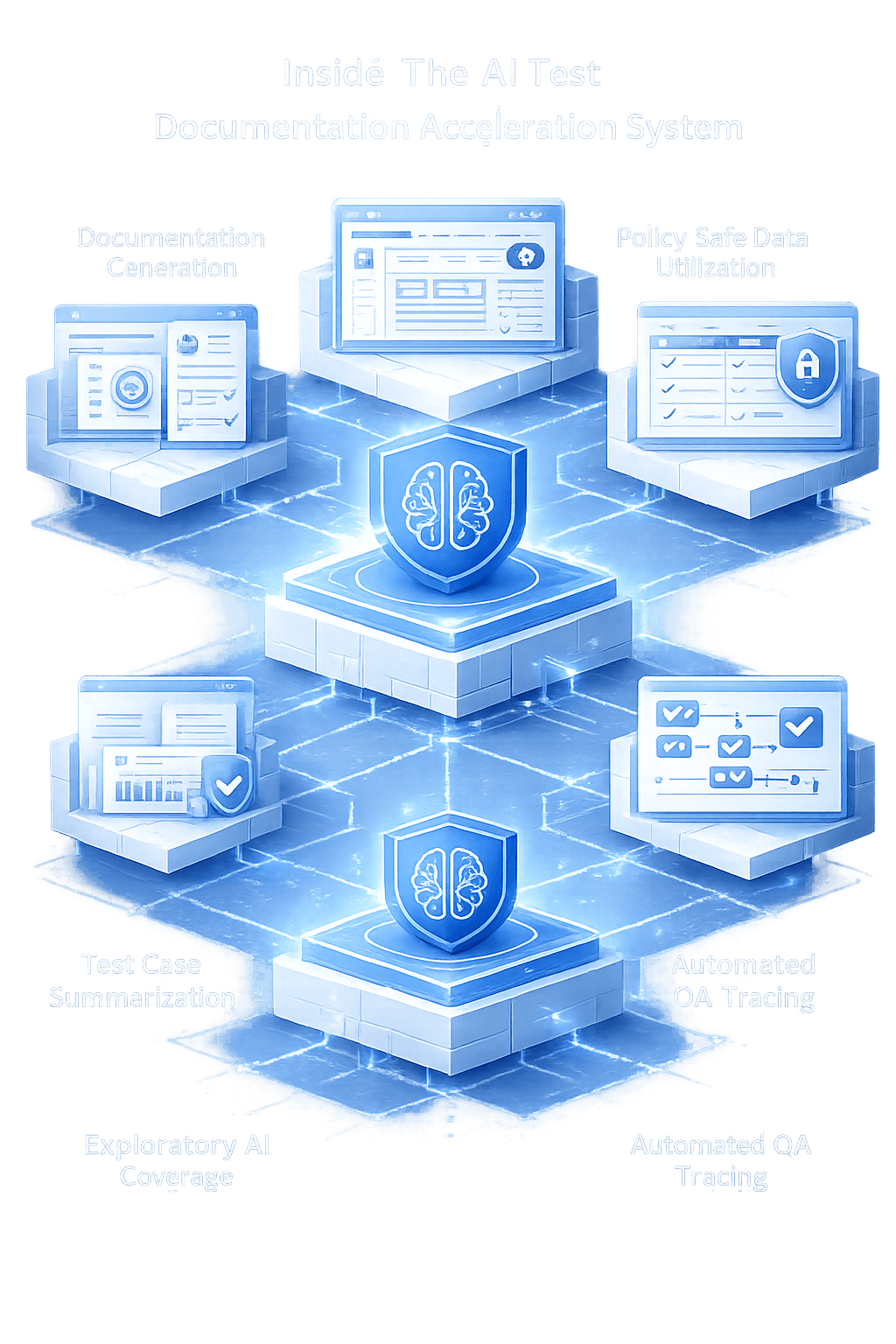
The AI Test Documentation Acceleration System is engineered as a structured QA documentation architecture.
It is not a collection of prompts.
It is a layered framework designed to bring consistency, traceability, and disciplined thinking to AI-assisted test documentation.
Each component performs a defined role within the broader documentation lifecycle.
When deployed together, they form a coherent system rather than isolated outputs.
The framework is organised into five capability layers.
1. Role-Specific AI Thinking Models
Purpose
To guide AI output through structured QA reasoning rather than generic language generation.
AI tools are powerful but directionless without context.
This layer embeds role-based thinking models that reflect how experienced QA professionals structure judgment and documentation.

Enterprise Test Manager Model
Designed to frame strategic documentation, including:
- Test strategy definition
- Governance structure
- Risk alignment
- Entry and exit criteria
- Environment planning
Output is shaped from a leadership and oversight perspective.

Senior Test Analyst Model
Focused on analytical depth:
-
Requirement interpretation
-
Functional and non-functional decomposition
-
Edge case identification
-
Assumption surfacing
This reduces shallow coverage and strengthens scenario design.

Defect & Quality Governance Lead Model
Structured to support:
-
Clear defect articulation
-
Severity and impact reasoning
-
Stakeholder-ready summaries
-
Root cause framing
This ensures defect documentation supports decision-making, not just tracking.

2. Structured Documentation Workflow Engine
Purpose
To provide repeatable, standards-aligned workflows that reduce drafting time while preserving professional discipline.
Rather than prompting AI ad hoc, this layer introduces structured documentation sequences.
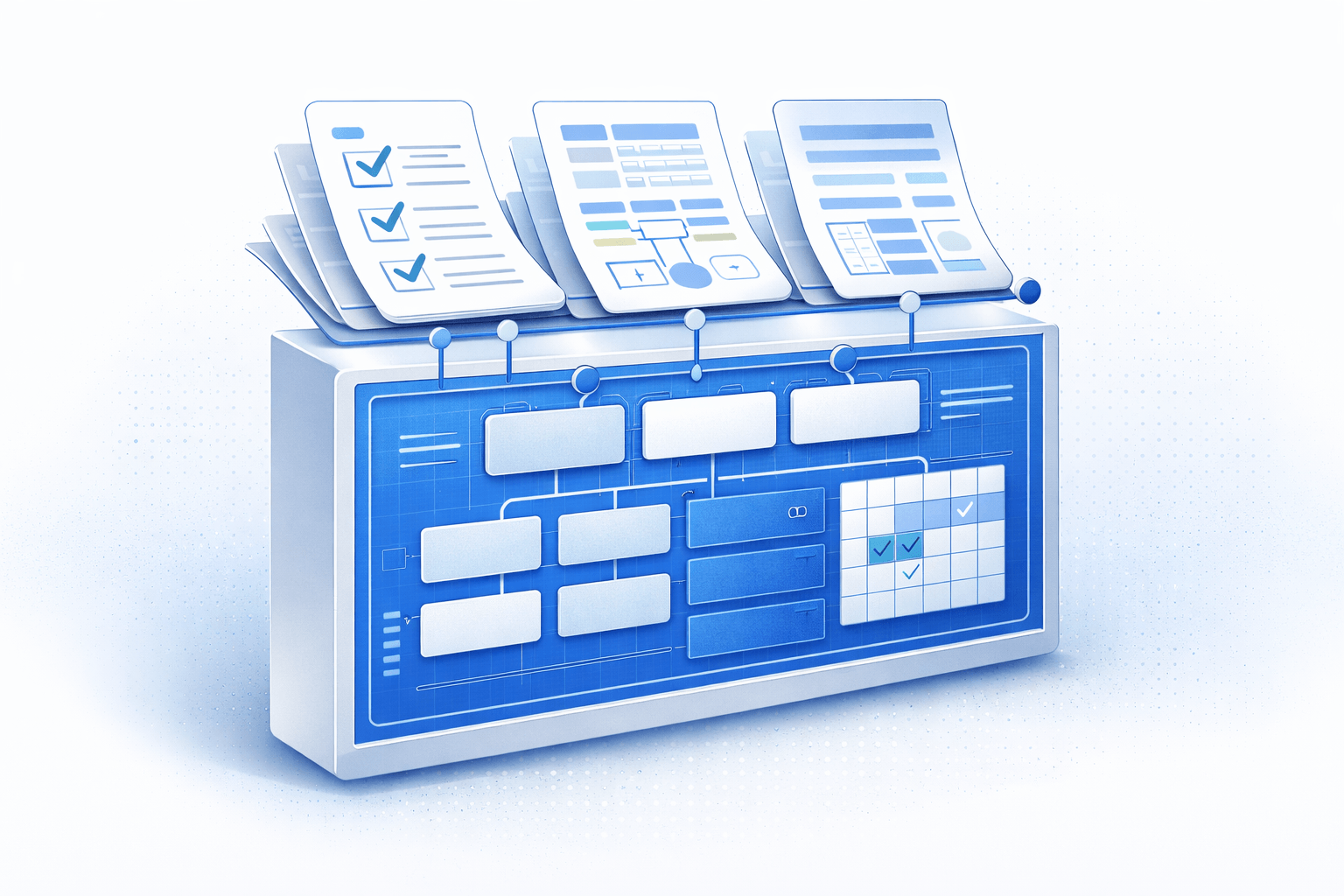
Test Stategey Builder
Guides structured creation of:
-
Scope definition
-
Methodology alignment
-
Risk-based prioritisation
-
Governance and reporting structures
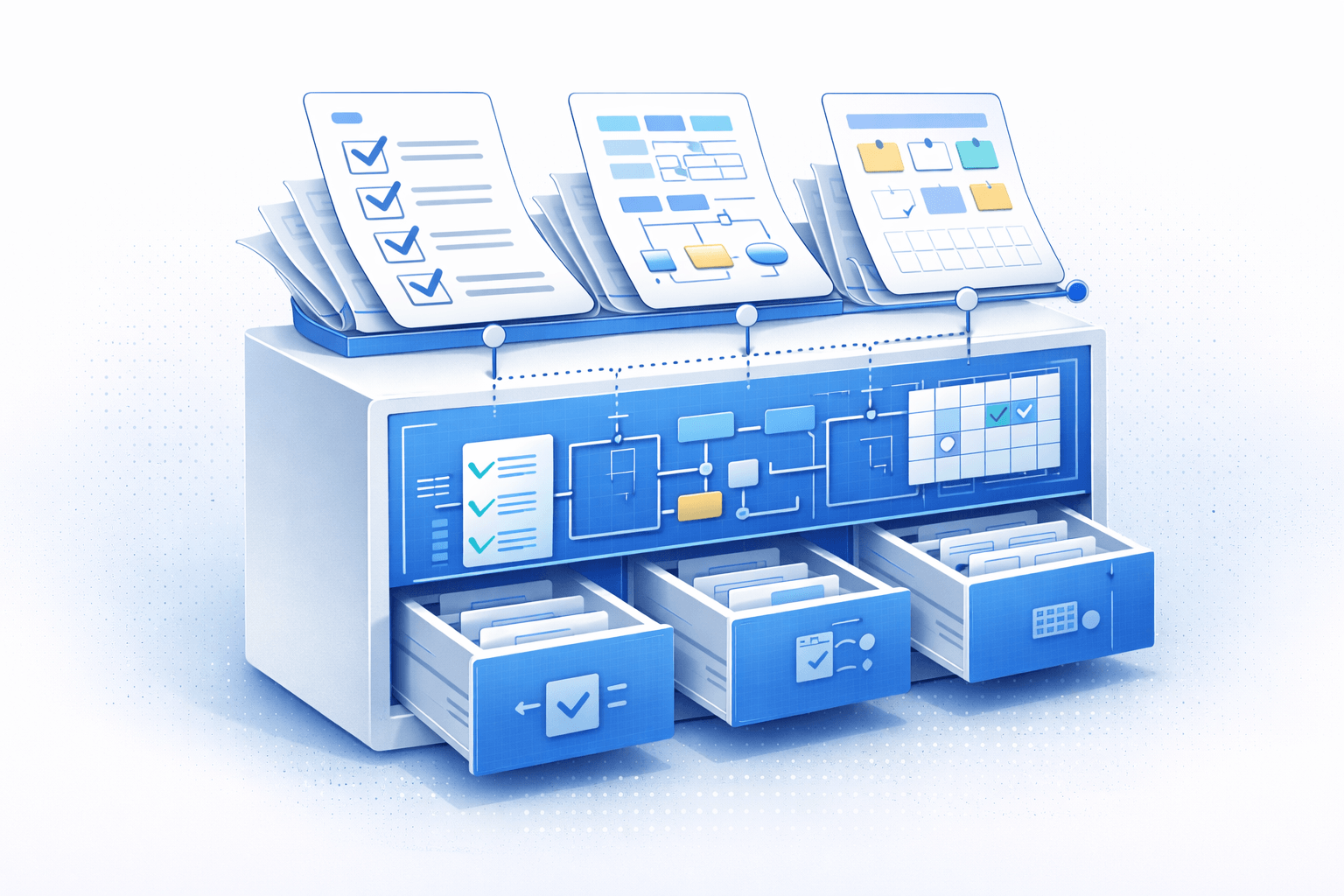
Master & Sprint Test Plan Builders
Produce:
-
Objective-driven plans
-
Resource and dependency awareness
-
Entry and exit criteria
-
Assumption documentation
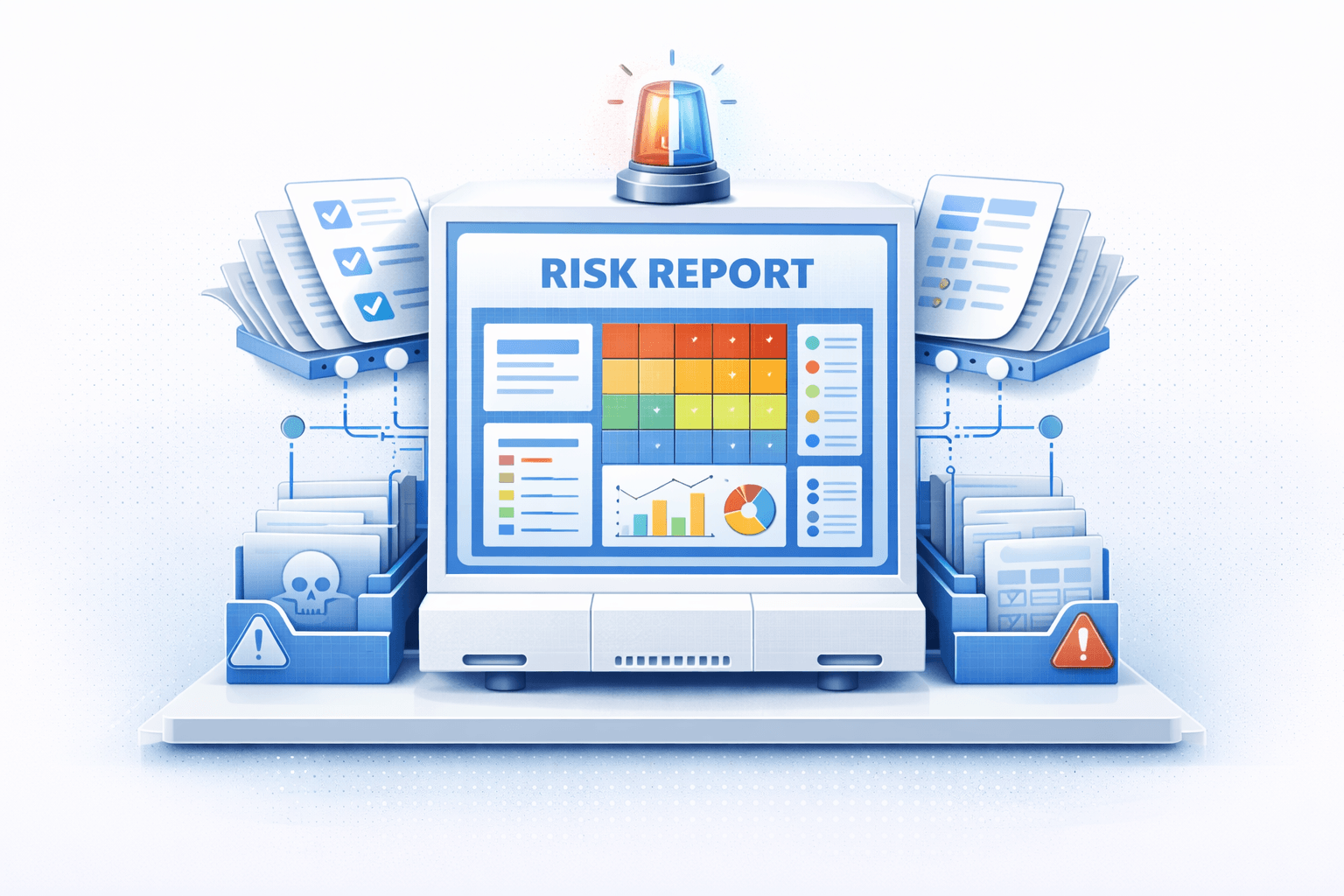
Risk Report Generator
Supports:
-
Risk identification and classification
-
Impact analysis
-
Mitigation articulation
-
Ownership definition
These workflows create disciplined artefacts with reduced cognitive overhead.

3. Requirement & Coverage Structuring Suite
Purpose
To ensure requirements translate into defensible and traceable coverage.
Coverage gaps rarely occur due to a lack of effort. They occur due to unstructured interpretation.
This layer strengthens the requirement analysis before documentation is produced.

User Story Decomposition Framework
Breaks down:
-
Functional intent
-
Edge conditions
-
Ambiguities
-
Hidden assumptions
-
Non-functional implications
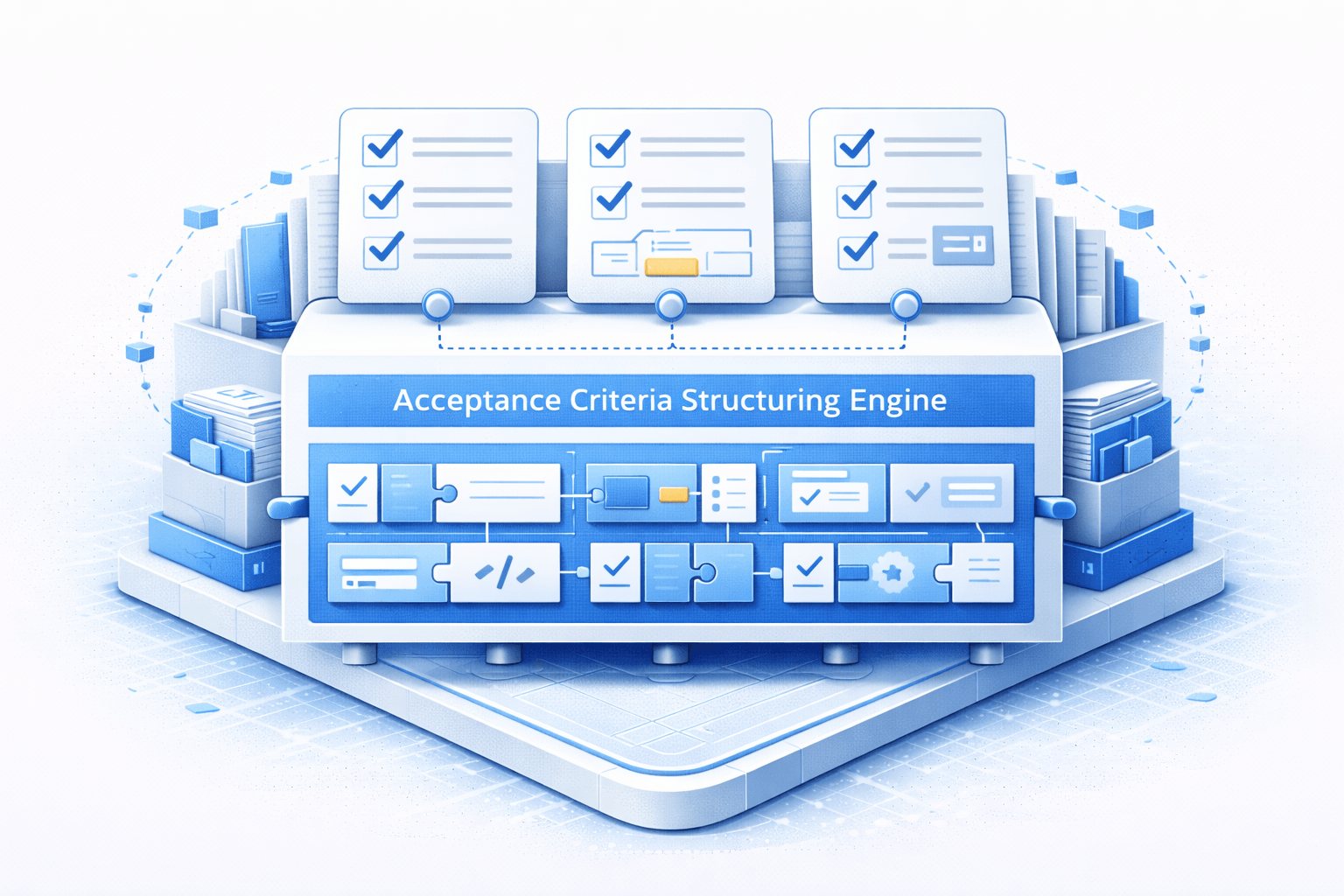
Acceptance Criteria
Structure Engin
Enhances:
-
Clarity
-
Measurability
-
Testability
-
Completeness
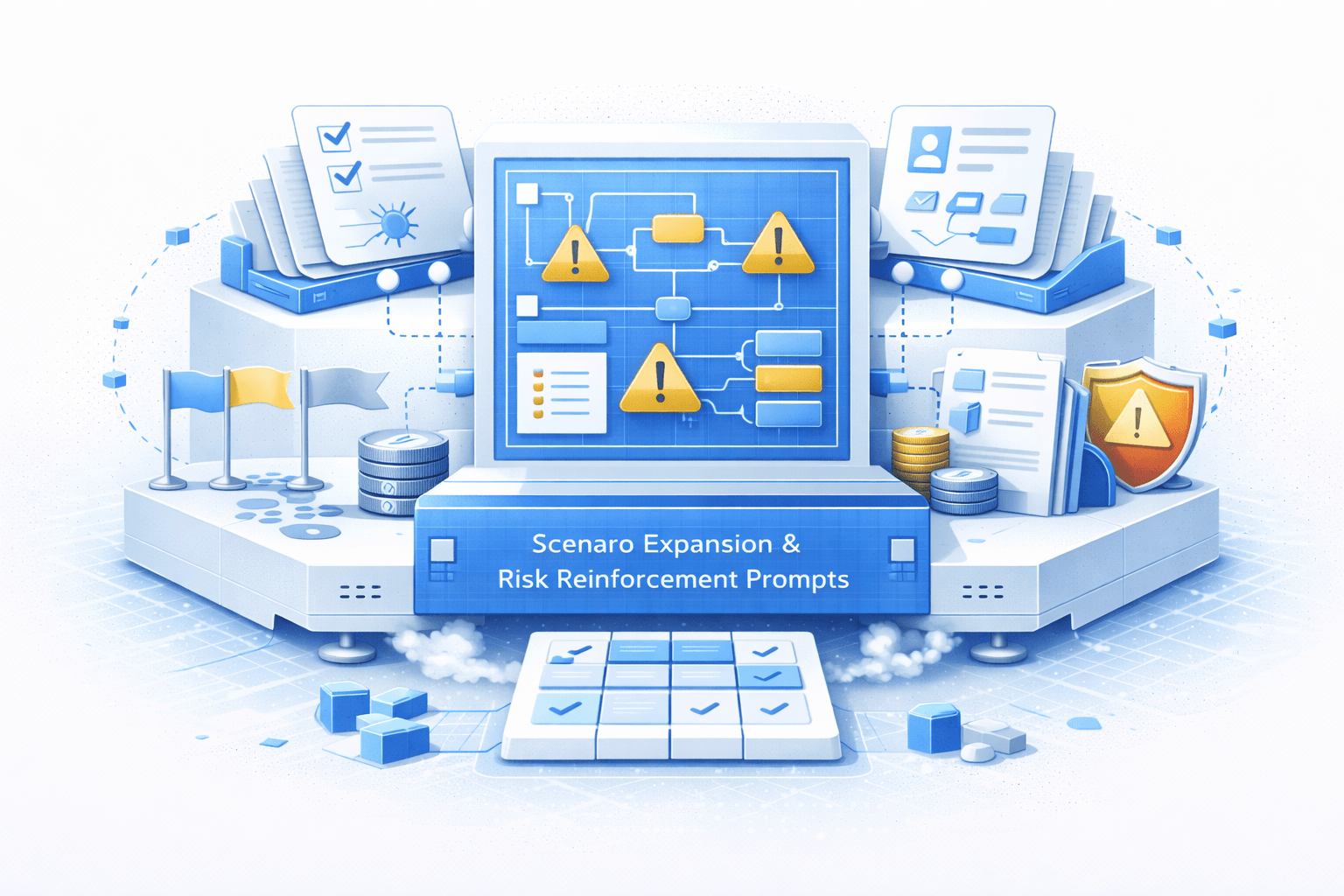
Scenario Expansion
& Risk Reinforcement Prompts
Designed to:
-
Surface negative paths
-
Extend boundary conditions
-
Highlight performance and security considerations
-
Identify overlooked risks
This layer strengthens analytical rigour before artefacts are finalised.

4. Defect Governance & Reporting Framework
Purpose
To bring structure and credibility to defect documentation and communication.
Defect quality directly influences stakeholder confidence.
This layer standardises articulation and reporting structure.
Report Standardisation
-
Reproducible defect report templates
-
Severity and impact justification guidance
-
Stakeholder-facing summary formats
-
Communication clarity prompts
The result is consistent, defensible defect documentation aligned with delivery governance.
5. Requirements Traceability & Audit Evidence Engine
Purpose
To ensure documentation is not only complete, but defensible and review-ready.
Traceability is where documentation either withstands scrutiny or collapses under review.

Requirements to Test Mapping Workflows
Establish structured links between:
-
User stories
-
Test scenarios
-
Coverage matrices
-
Defect records

Coverage Correlation Structures
Identify:
-
Gaps
-
Overlaps
-
Risk concentrations

Audit Evidence Compilation Prompts
Supports:
-
Evidence assembly
-
Documentation consistency validation
-
Review preparation

In regulated or high-stakes environments, traceability is non-negotiable.
This layer ensures documentation integrity is preserved across artefacts.
Who This Framework Is Designed For
The AI Test Documentation Acceleration System is built for teams who:
-
Operate in structured delivery environments
-
Work under governance or audit expectations
-
Need to reduce documentation overhead without reducing rigour
-
Want AI to support professional judgement, not replace it
If documentation credibility matters in your environment, this framework provides the architecture to maintain it at speed.
Purchase Your
AI Test Documentation Acceleration System
£247 One-Time
Need To Write A Business Case?
Check Out Our Template and ROI Calculator
“The prompts fit alongside existing processes. It does not disrupt them.”
“It does not replace your judgement. It supports the way you choose to think.s”
“This will not replace skilled testers. It works alongside them.”
Terms & Conditions
Privacy Policy
Contact
QA Persona is a trading name of
Quality Led Projects LTD
Copyright © 2026, Qiuality Led Projects